
Perforated Cable Tray
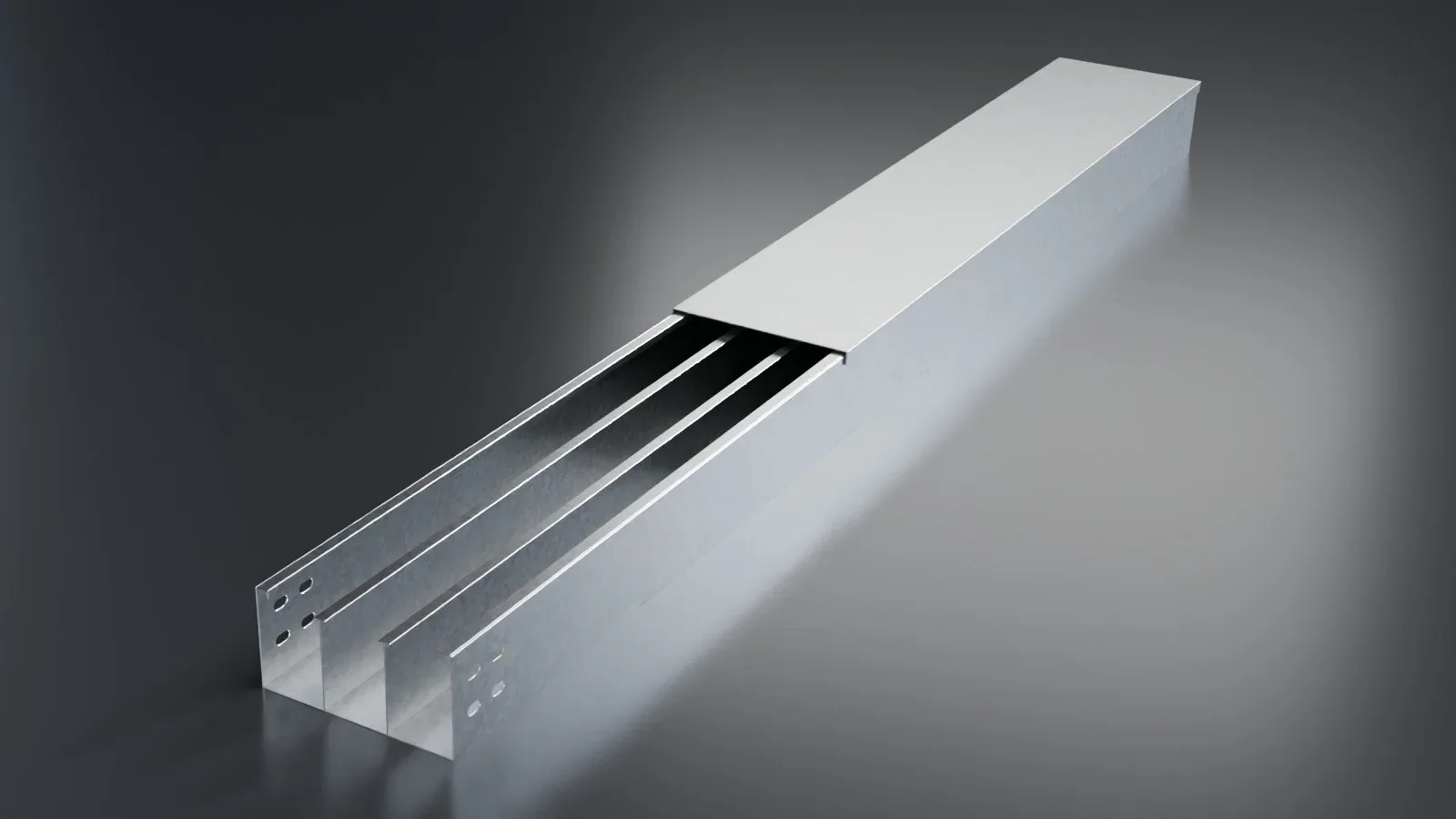
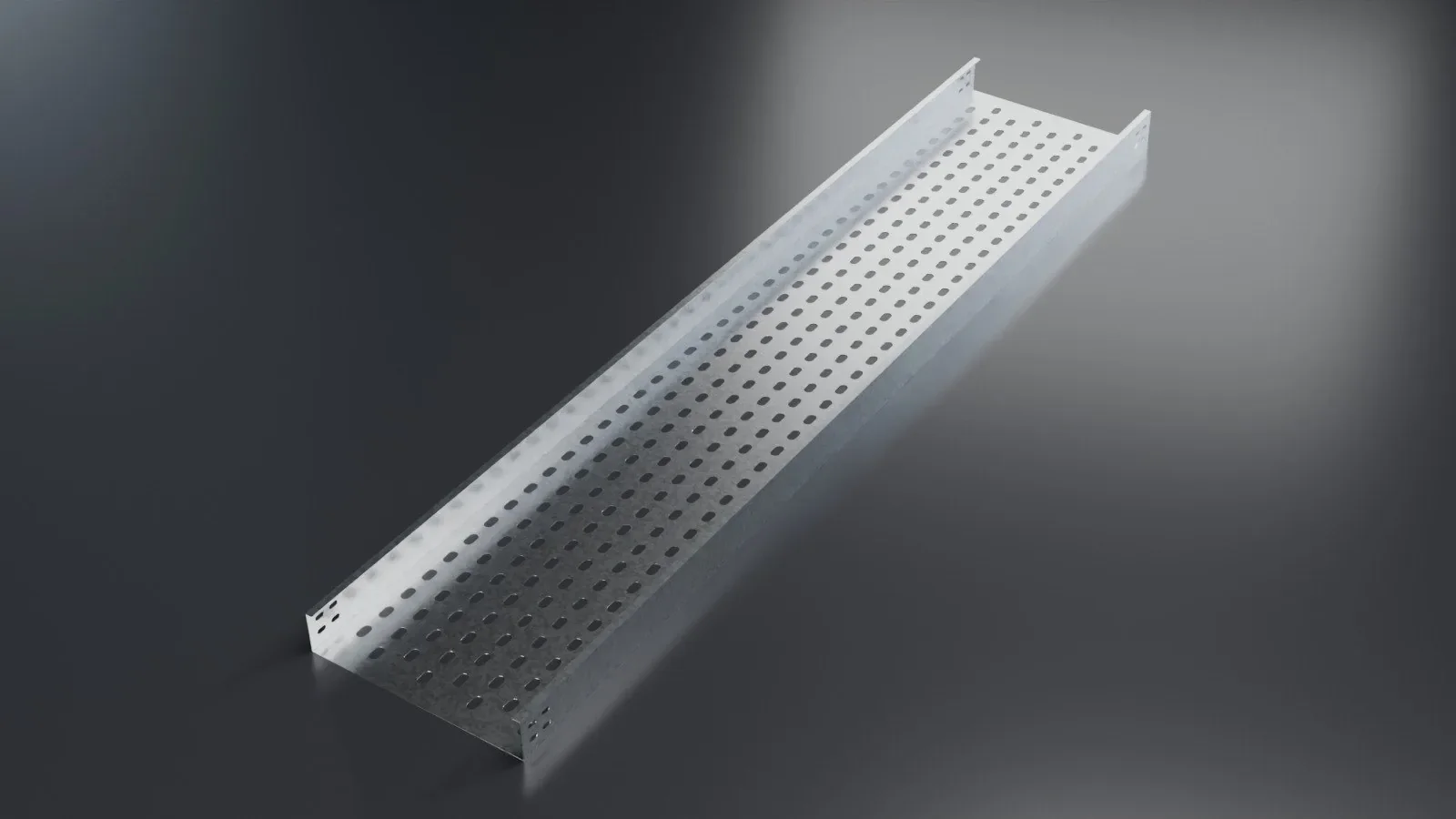
Perforated cable trays feature a continuous structural tray with a ventilated bottom containing uniformly spaced holes. The perforations provide excellent ventilation for the cables, preventing heat buildup while still offering a solid, flat surface that securely supports smaller, flexible, or high-density instrumentation and control cables.
Choose perforated cable trays for running instrumentation and data cables, control or small-bore power cables, especially in indoor panels, control rooms and plant areas where cables need full support underneath.
| Specification | Range |
|---|---|
| Sheet thickness | 1.2 mm to 3.0 mm |
| Standard length | 2.5 m or 3.0 m |
| Width | 50 mm to 1500 mm |
| Special sizes | Made to order |
Ladder Type Cable Tray
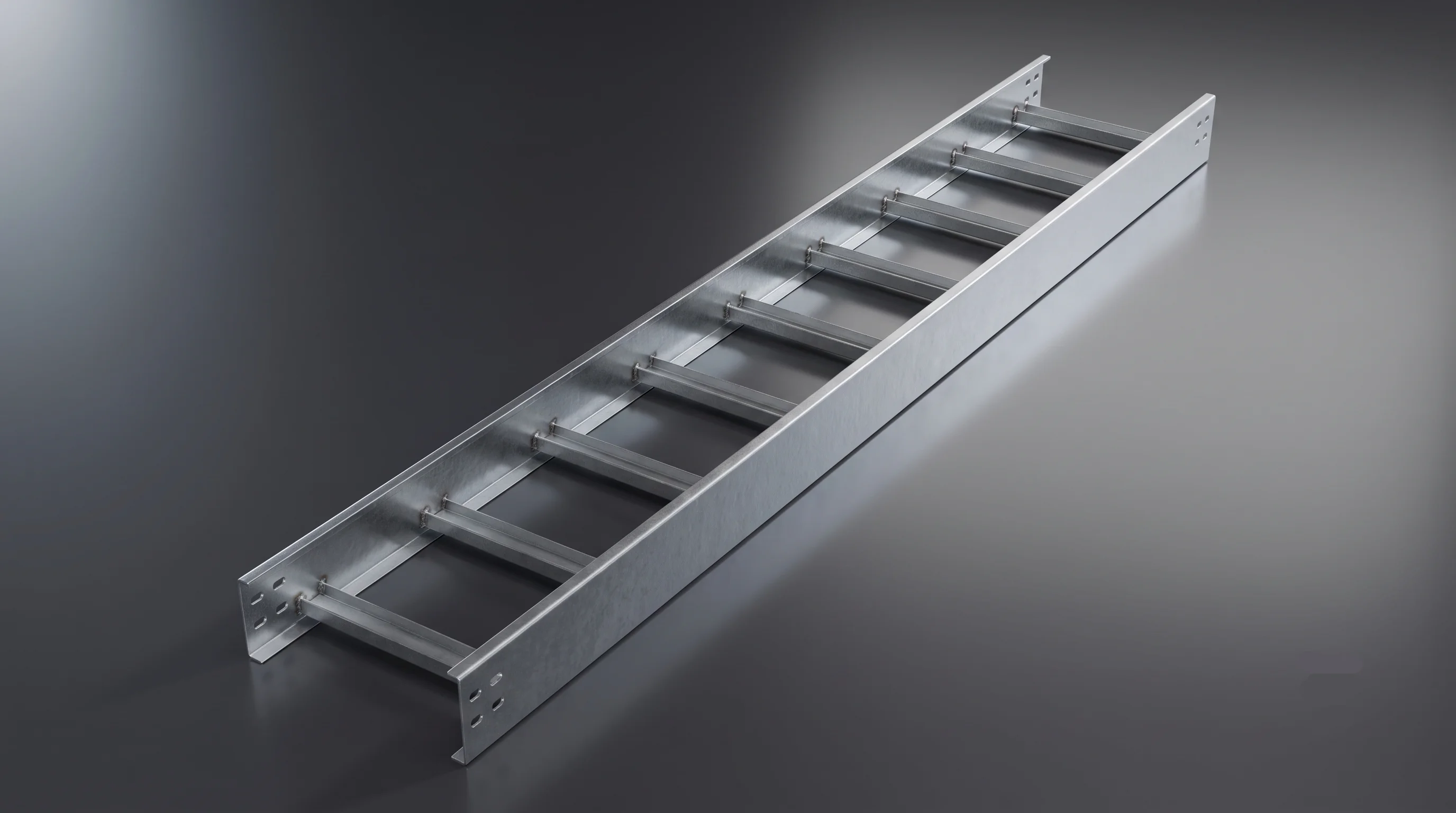
Ladder cable trays consist of two longitudinal side rails connected by individual transverse rungs, resembling a standard ladder. This design provides maximum airflow and ventilation, allowing heat to dissipate rapidly from high-power cables. The rungs offer convenient anchor points for tying down heavy cables, and the open structure prevents dirt, dust, or moisture from accumulating inside the tray.
Choose ladder type cable trays for heavy power cables over long runs, such as in substations, solar plants and outdoor cable routes, where airflow, load capacity and keeping dust and moisture out of the tray matter most.
| Specification | Range |
|---|---|
| Sheet thickness | 1.6 mm to 3.0 mm |
| Standard length | 2.5 m or 3.0 m |
| Width | 50 mm to 1500 mm |
| Special sizes | Made to order |
Cable Tray Fittings and Accessories
Fittings and accessories for both perforated and ladder trays, made to match your cable tray.
Cable tray fittings
Cable routes rarely run straight, and no two cable plans are alike. We supply horizontal bends, vertical inward and outward bends, tees, crosses and reducers made to your drawing, in the same section, thickness and finish as your tray. Every change of direction, branch or width in your plan is covered, from a single straight run to a complex multi-level layout.
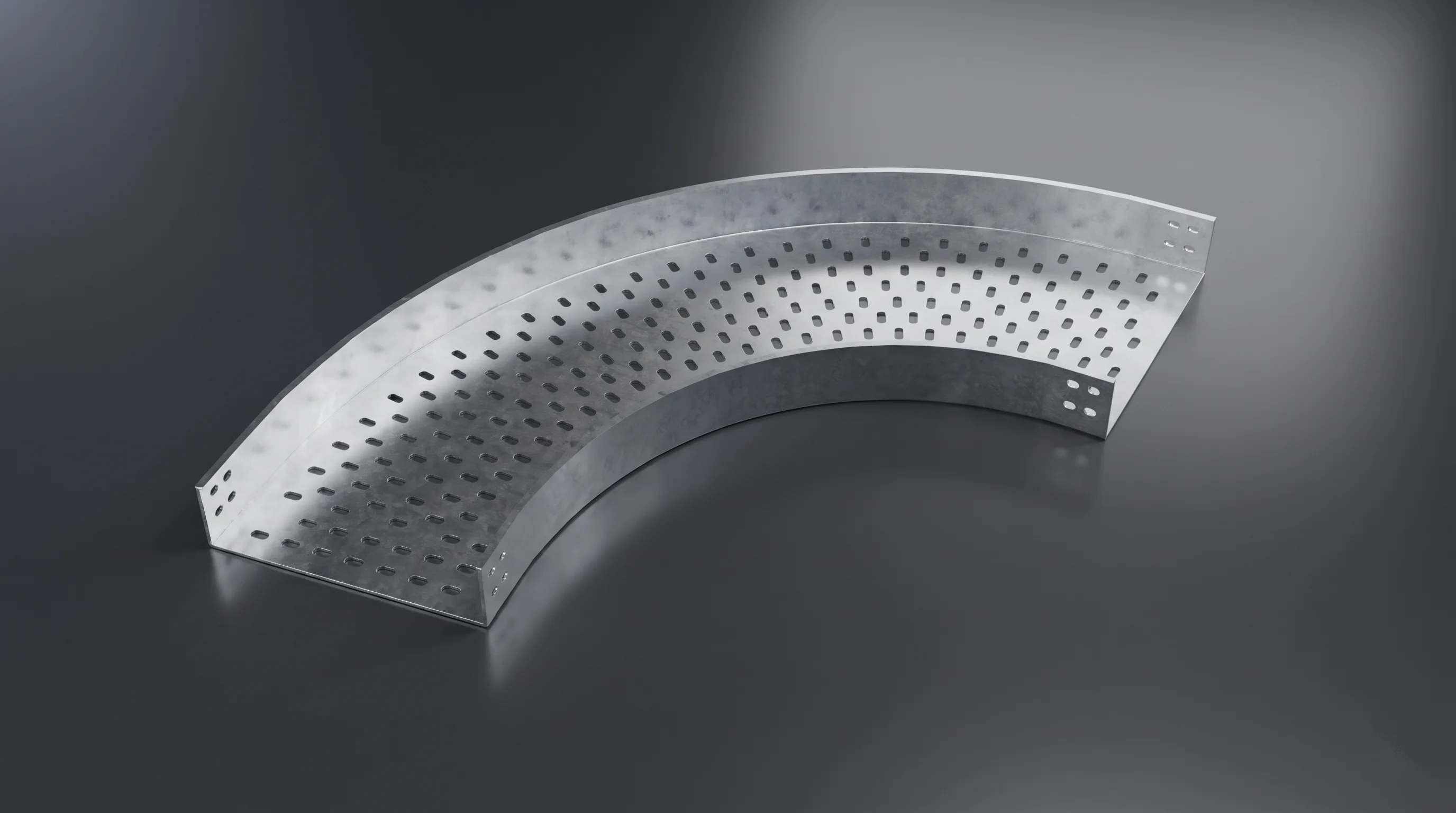
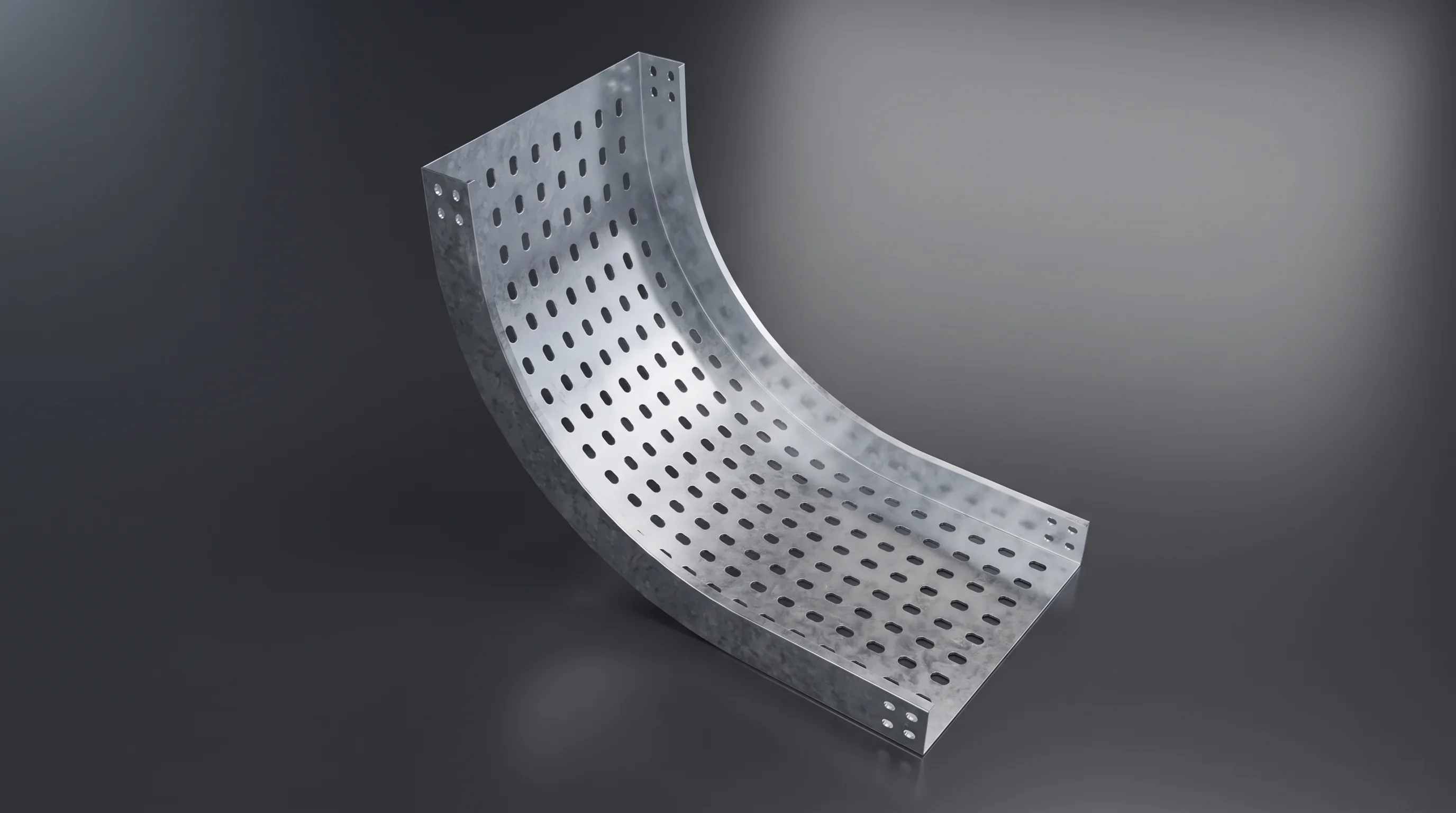
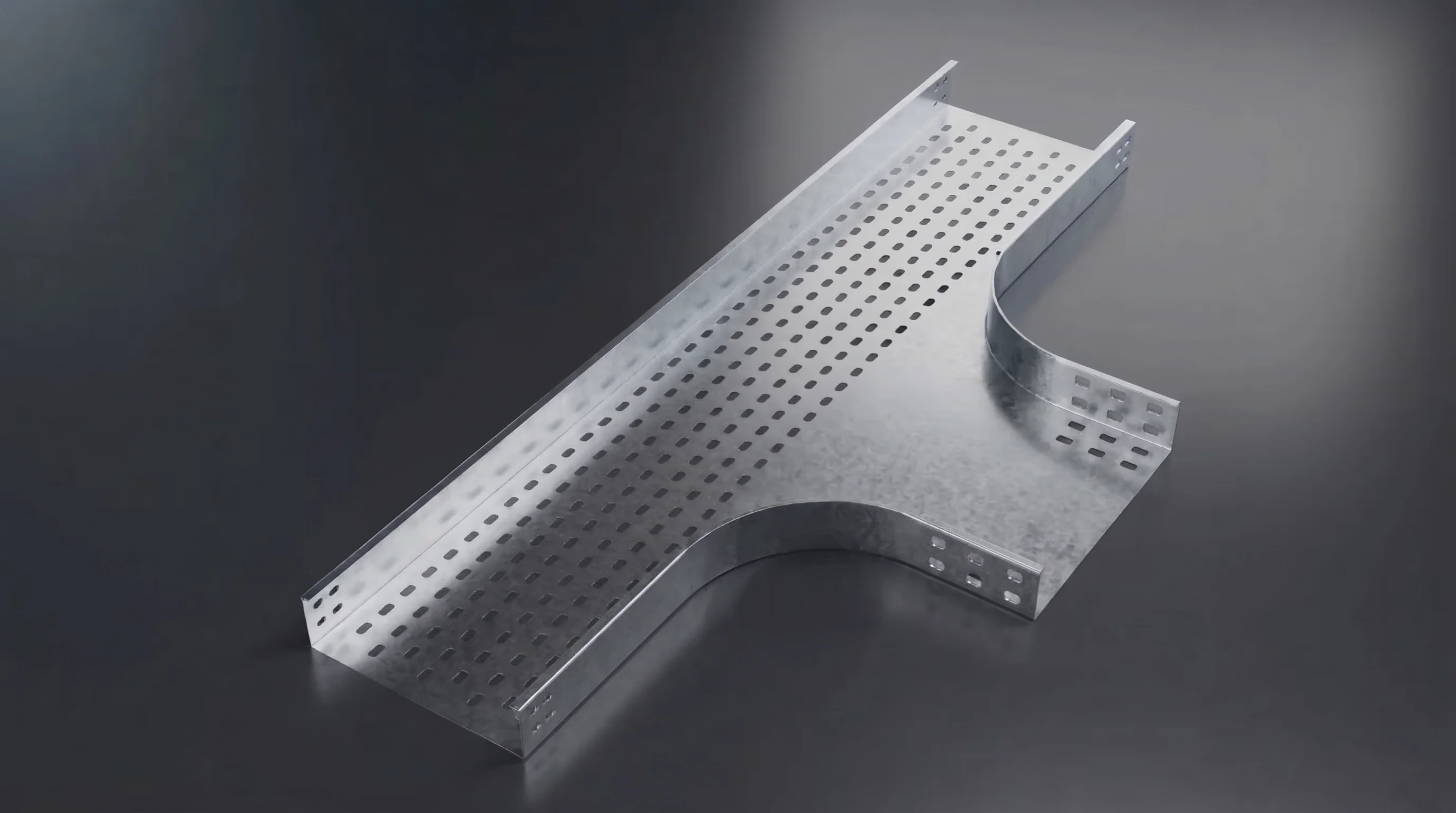
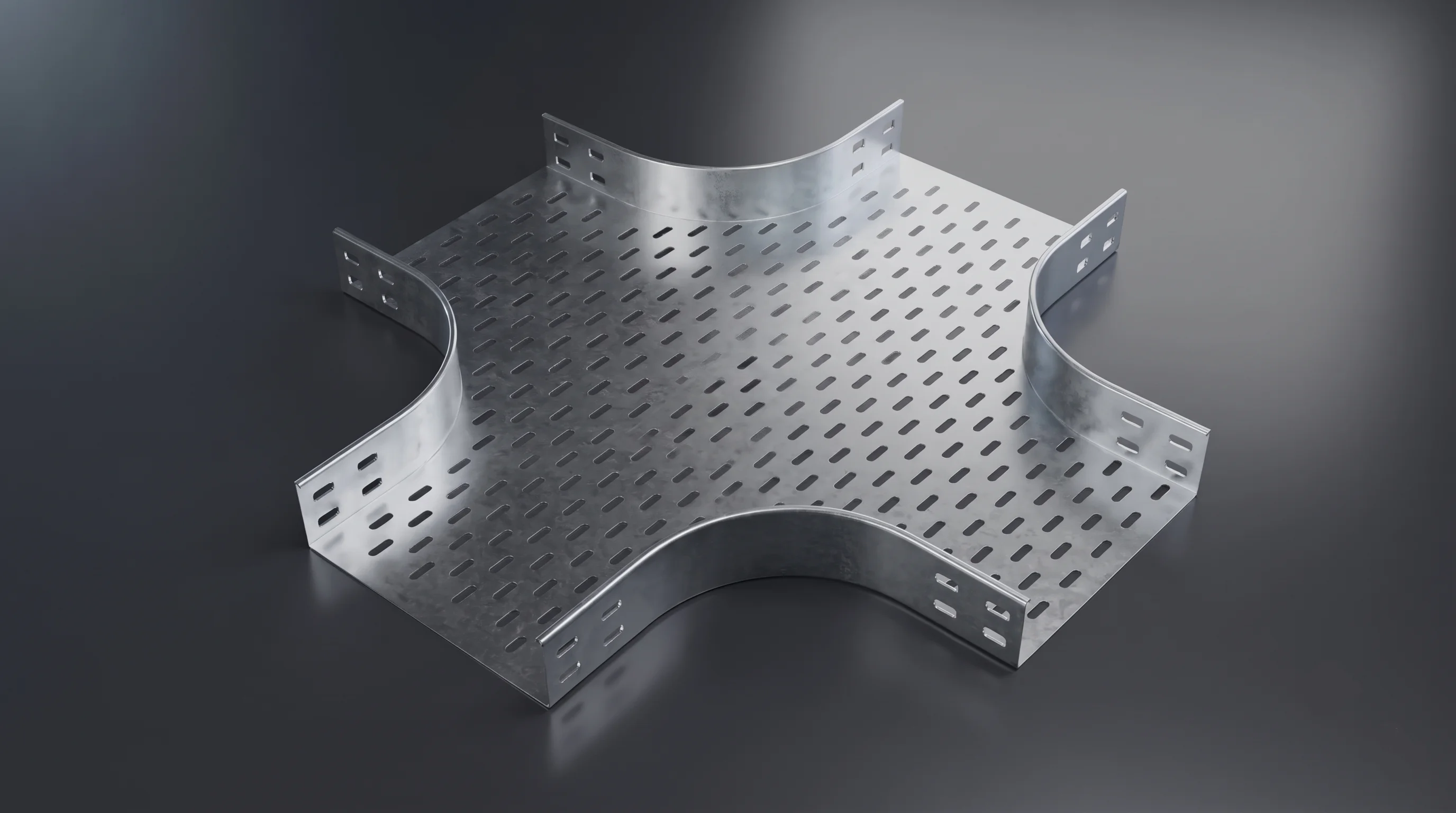
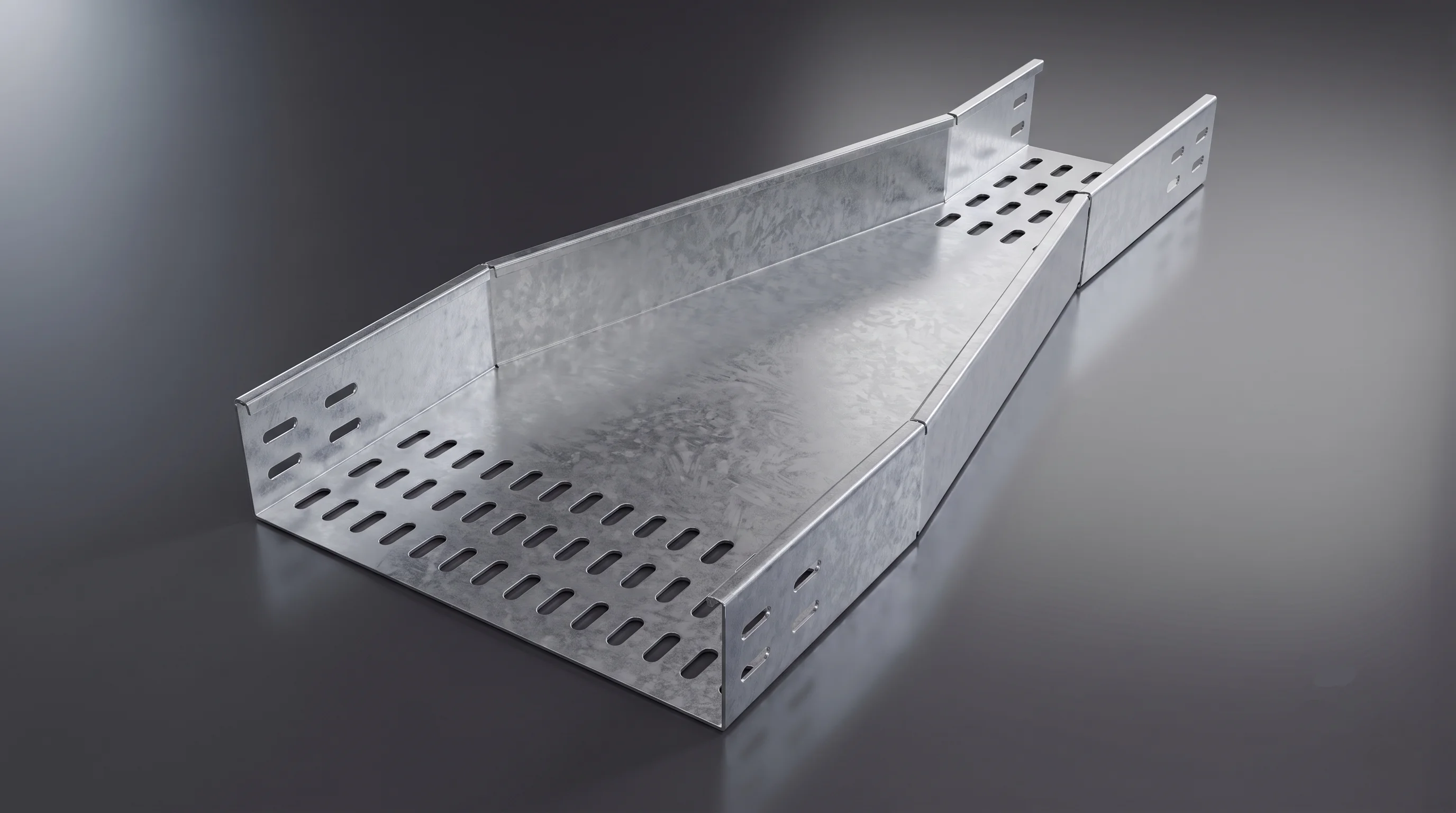
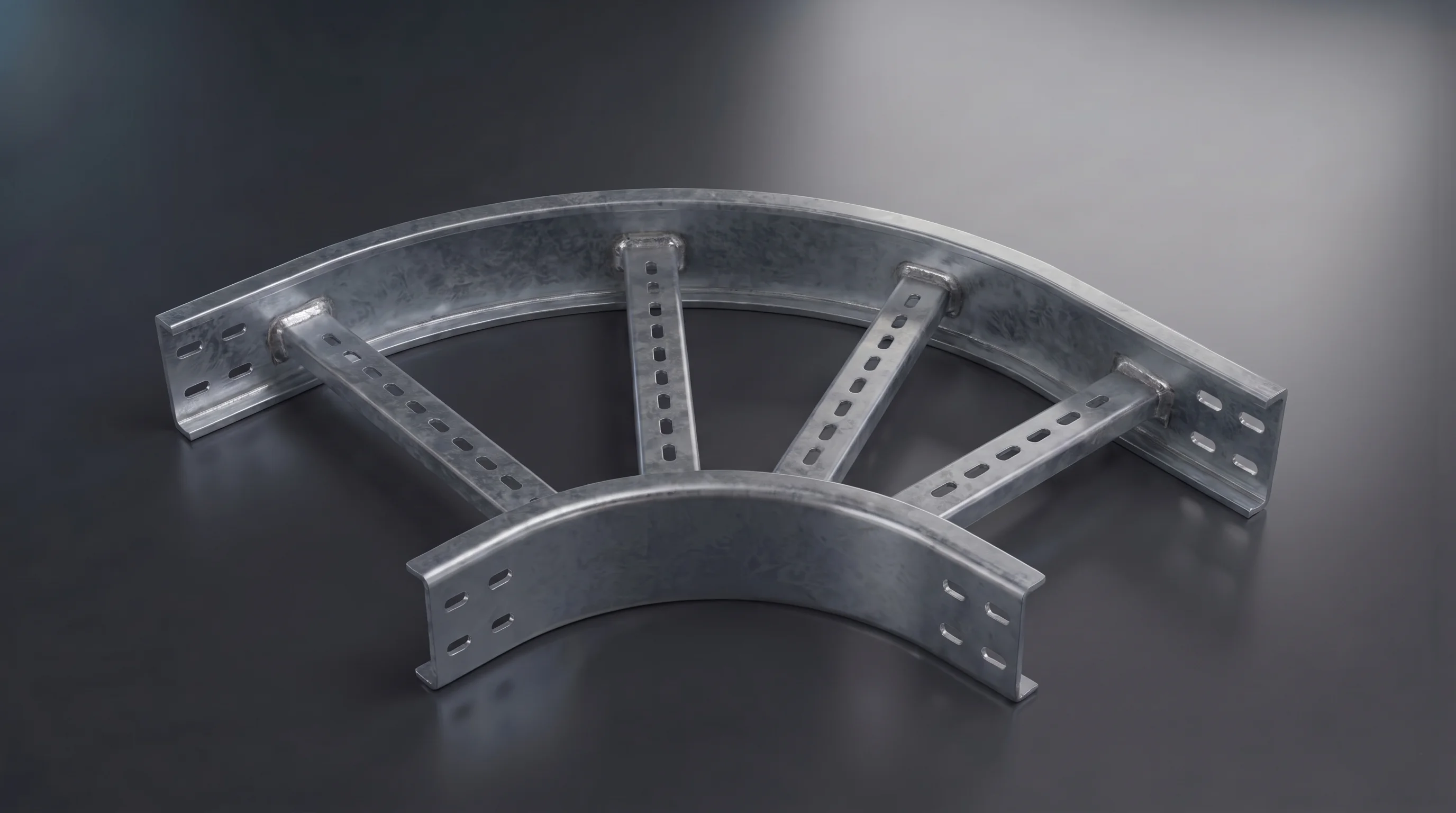
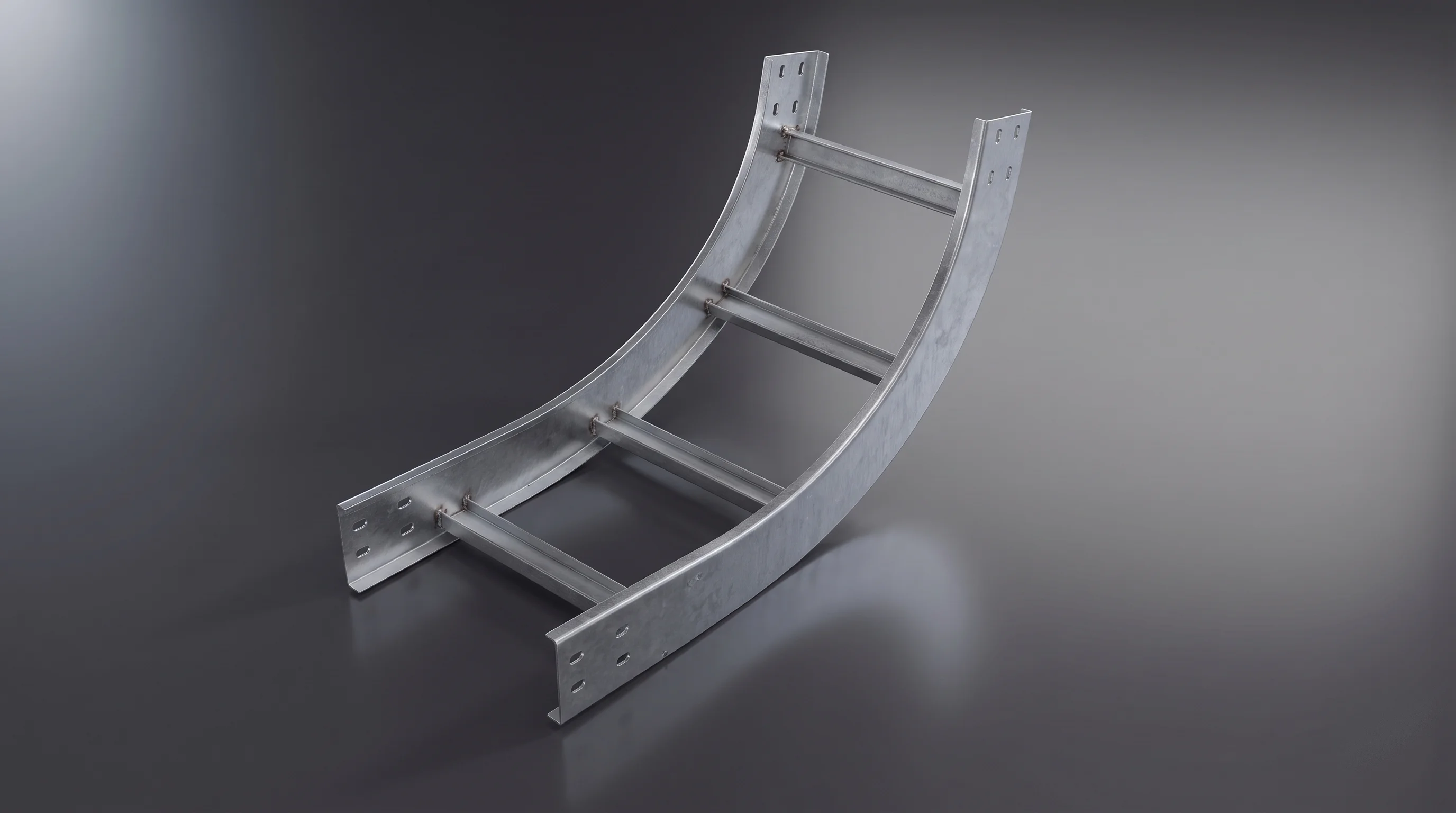
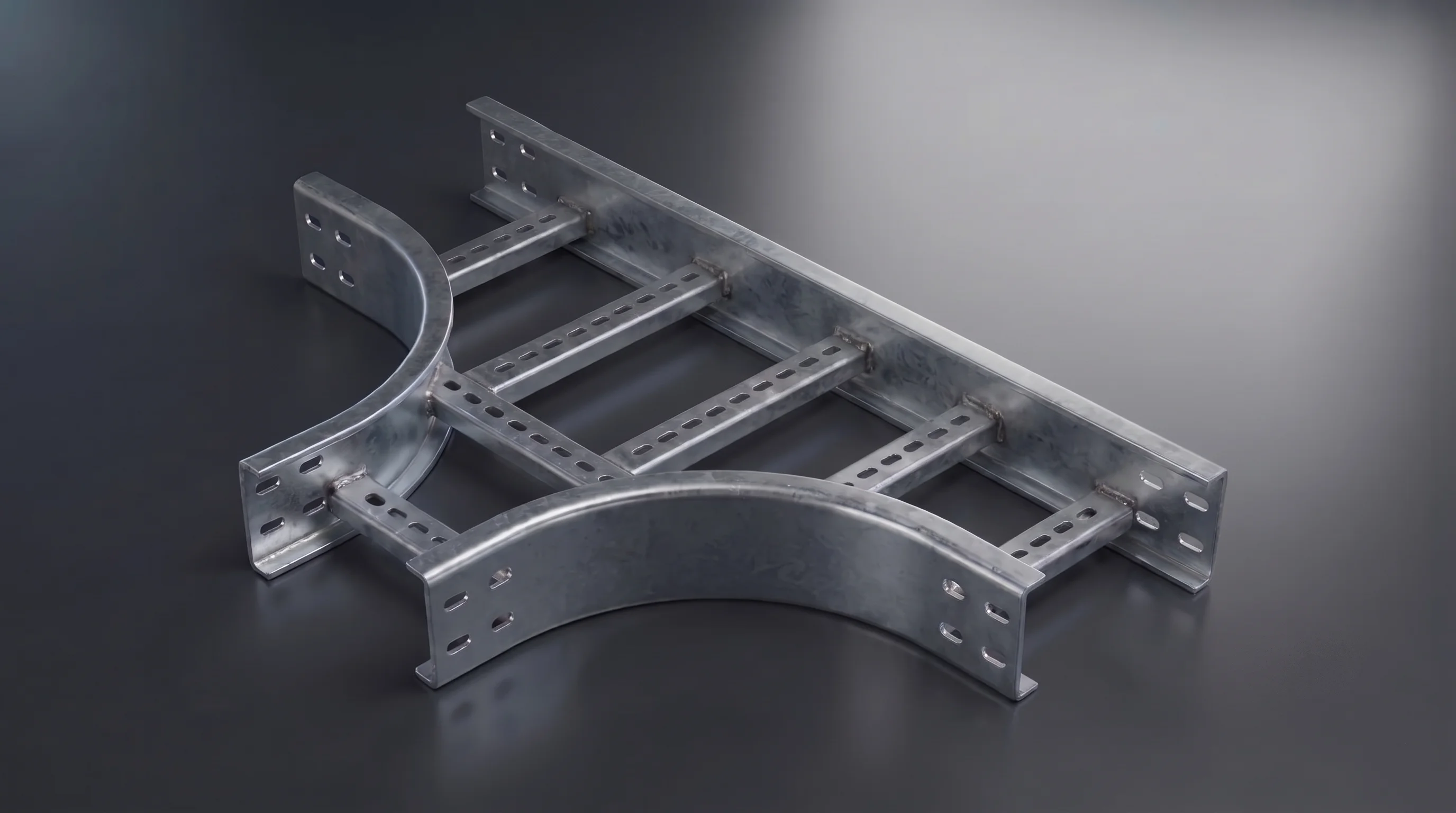
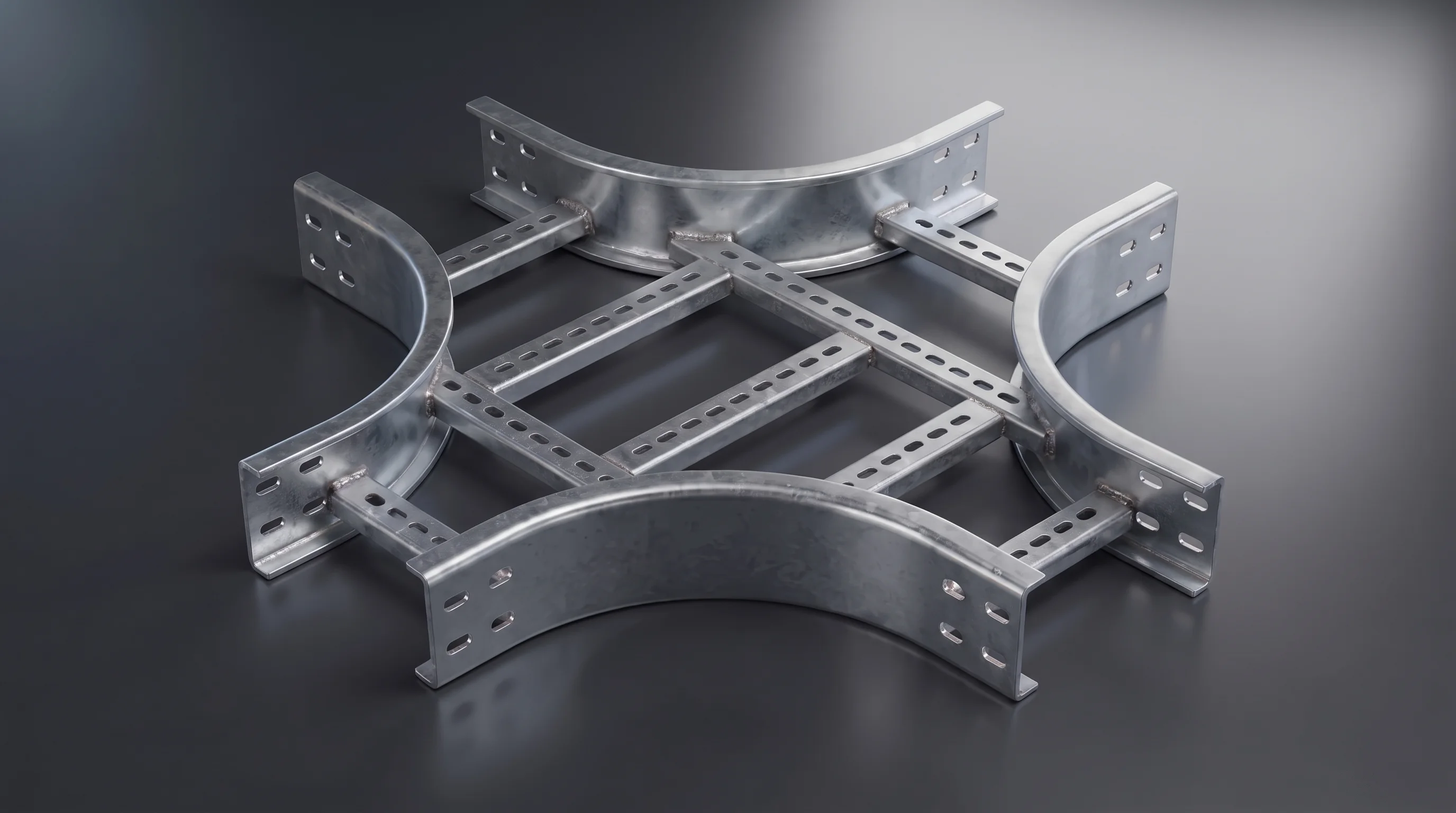
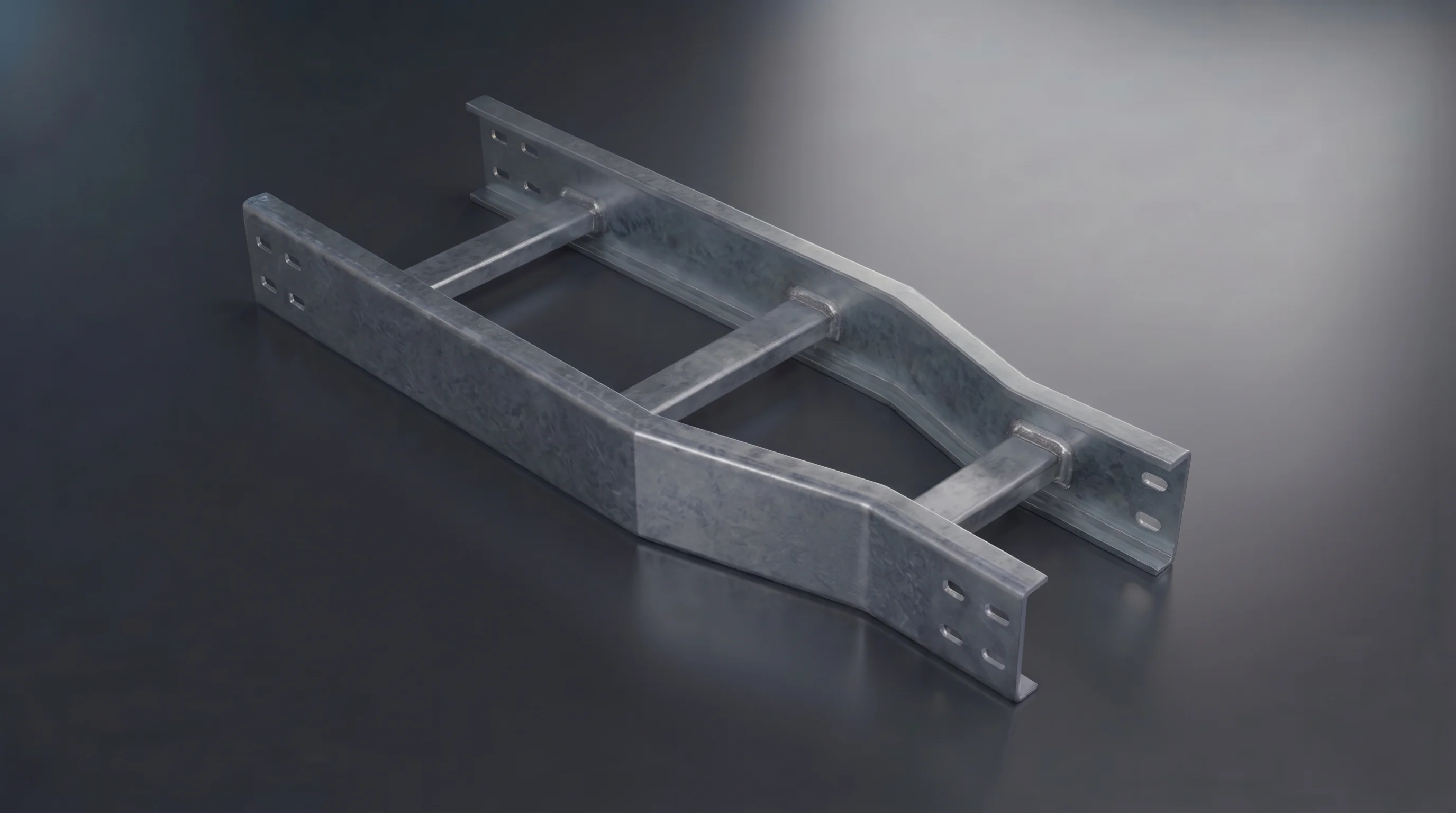
Choose cable tray fittings made to suit your cable plan and to seamlessly link with your cable tray, keeping the route streamlined and easy-to-manage.
Installation and support hardware
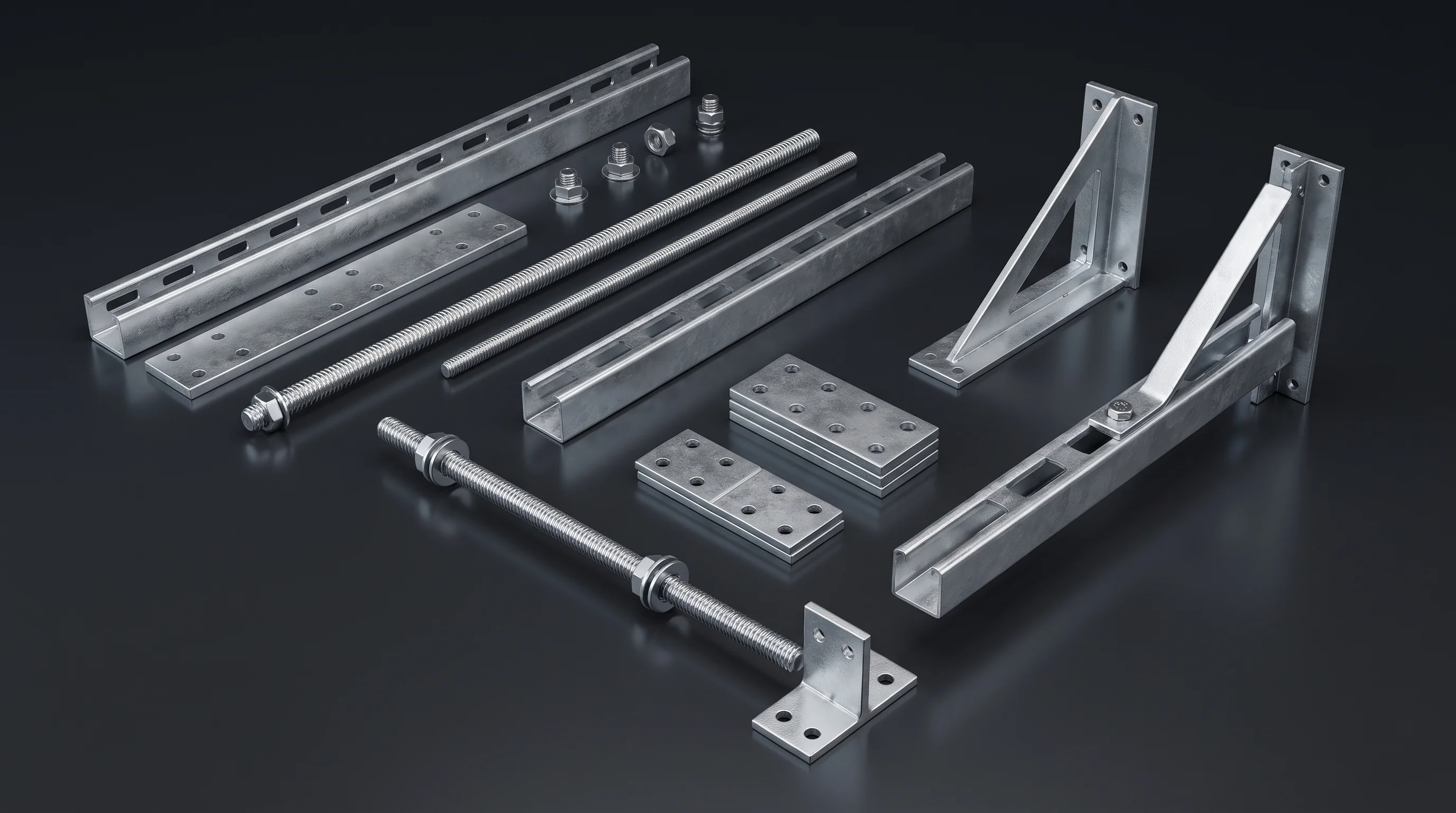
Cable trays can be ceiling-suspended, wall-mounted, floor-supported or run vertically as risers, depending on the cable plan. Each arrangement places different demands on its supports, from the suspension system carrying an overhead run to the brackets holding a wall-mounted one. We manufacture and supply complete support systems alongside the trays, made to your cable plan for a smooth installation. These include coupler plates, fish plates, fasteners, suspension rods, channels, brackets and cantilever arms.
Covers, dividers and end plates
Once the trays are installed, the system can be finished to suit the cables it carries. Covers protect cables from dust, debris and falling objects. Dividers and partition plates keep power, control and data cables separated within a single tray, and end plates close off the tray ends, completing the enclosure. Each is manufactured to match the tray it serves.
Materials and Finishes
We manufacture cable trays in-house in mild steel, pre-galvanised sheet, stainless steel or aluminium, so the material can match the project's requirements. Fabrication, hot-dip galvanising and testing are all carried out at our own manufacturing unit. Our hot-dip galvanising is to IS 4759, the Indian Standard for hot-dip zinc coatings on structural steel and allied products. Finishes include pre-galvanised, hot-dip galvanised, powder coated and painted. Standard sizes are held; special sizes and finishes are made to order.
Cable Tray FAQs
Why is a good cable tray system so important?
Cables in a poorly designed route run hotter, which increases thermal losses and shortens insulation life. Sagging, tangled or mixed cables are harder to trace and inspect, so faults take longer to locate and downtime rises. A well-designed cable tray system keeps cables supported, ventilated and separated. This reduces thermal losses, lowers routine upkeep and maintenance, and cuts the cost of electrical repairs over the life of the installation.
What is the difference between perforated and ladder cable trays?
Perforated trays have a solid base with evenly spaced holes and fully support smaller, flexible and control cables. Ladder trays have two side rails joined by rungs, giving maximum airflow and making them better suited to heavy power cables over long runs.
What widths and thicknesses do you supply?
Cable trays are made from 50 mm to 1500 mm wide, in sheet thickness of 1.2 mm to 3.0 mm for perforated trays and 1.6 mm to 3.0 mm for ladder trays, with standard lengths of 2.5 m or 3.0 m. Special sizes are made to order.
Which materials and finishes are available?
Mild steel, pre-galvanised sheet, stainless steel and aluminium, finished in pre-galvanised, hot-dip galvanised, powder coated or painted options.
Can you make cable trays to our drawing?
Yes. As a manufacturer, we make all our cable trays and fittings to your drawing and requirement, with fabrication, galvanising and testing done in-house.
Do you supply bends, tees and mounting hardware along with the trays?
Yes. We supply horizontal and vertical bends, tees, reducers and crosses, along with C channels, cantilever arms, suspension rods, threaded rods, hanging frames, fasteners, covers, dividers and end plates, so one order can cover the whole run.
How do I request a quote?
Send your drawing or BOQ through the contact page or email info@swastikindustries.co.in.