
Cable trays look simple, but the wrong type or size causes problems later: sagging runs, hot cables, or trays that are hard to install. The two types we supply most are perforated and ladder trays. This guide explains the difference and how to pick between them.
What a Perforated Tray Is Good At
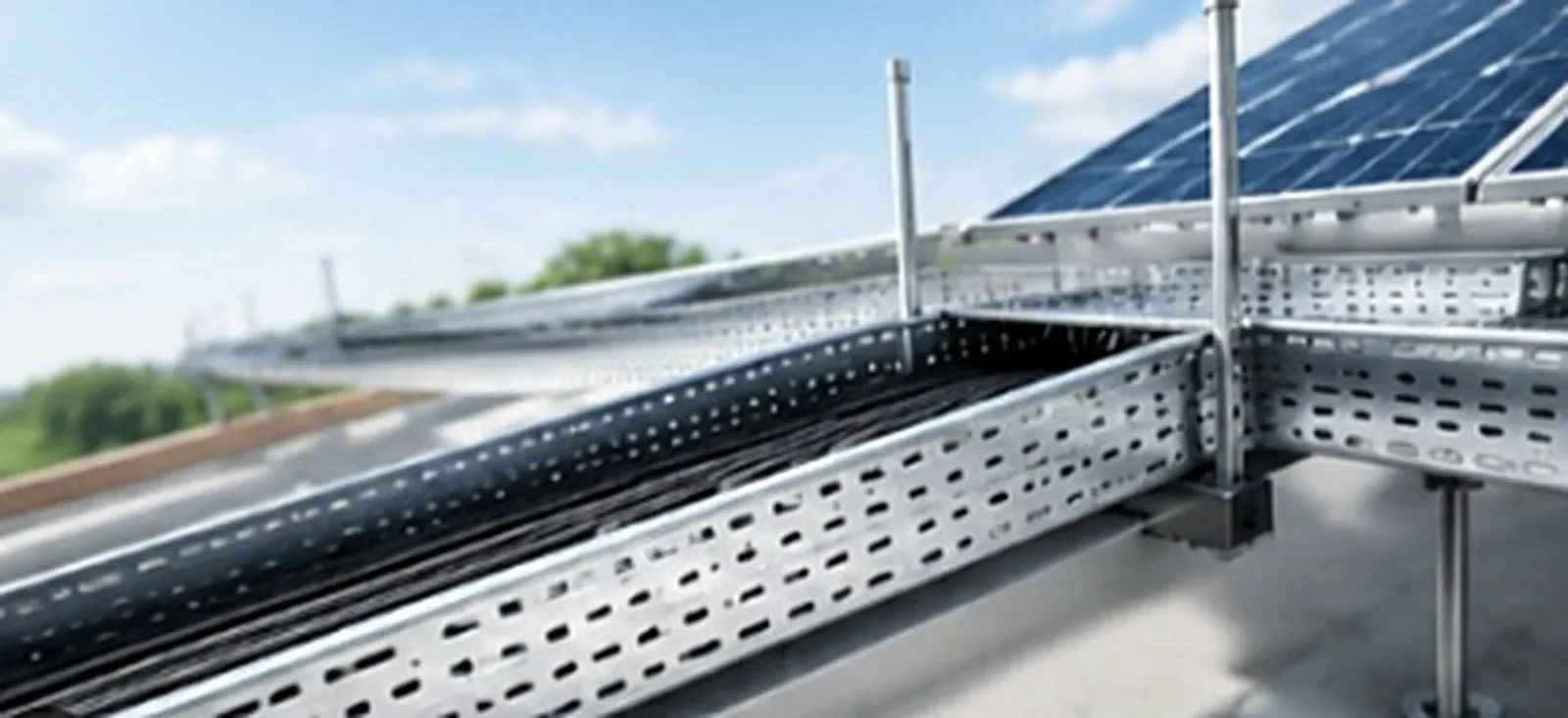
A perforated tray has a solid base with a regular pattern of holes. The holes let air move around the cables and give you fixing points for cable ties, so cables stay in place on vertical runs and bends.
- Good ventilation without a fully open structure.
- Easy tie-down of control and instrumentation cables.
- Supplied in widths from 50 mm to 900 mm.
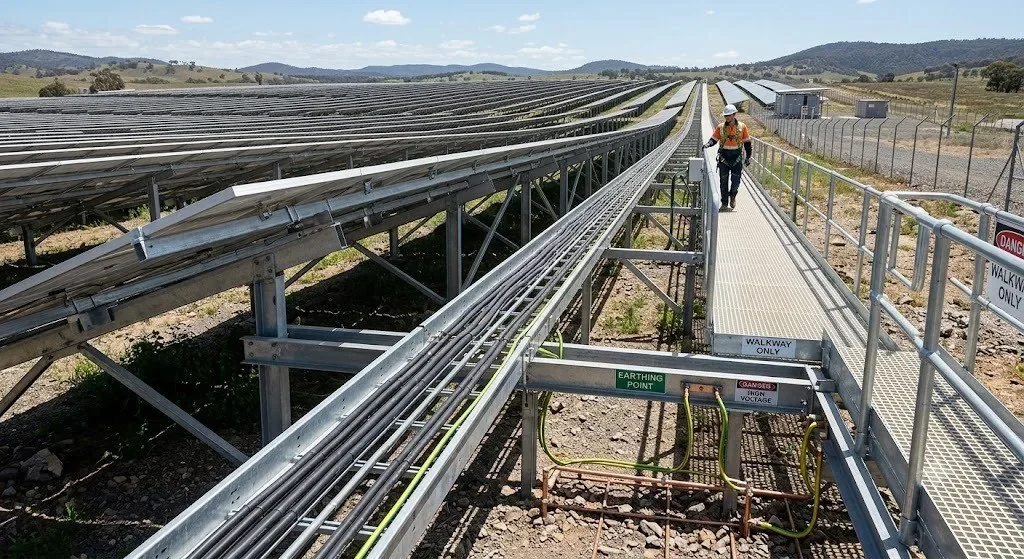
- Suited to electrical and control cables in plants, buildings and solar sites.
What a Ladder Tray Is Good At
A ladder tray has two side rails joined by cross rungs, like a ladder lying on its side. It is the usual choice for heavy power cables and for longer spans between supports.
- High strength and load capacity for heavy industrial use.
- Open design, so cables stay cool and dirt does not collect.
- Supplied in widths from 50 mm to 1500 mm.
- Better for long spans between supports and large cable bundles.

How to Decide
Start with the cables, then the site.
- Cable load: add up the weight of all cables per metre, including any you plan to add later. Heavier loads point to a ladder tray or a thicker perforated section.
- Span: the further apart your supports, the stiffer the tray must be. Ladder trays handle longer spans well.
- Cable type: many small control cables are easier to tie down on a perforated base. Large single-core power cables sit well on rungs.
- Environment: outdoor and corrosive sites need the right finish as well as the right tray. See the note on finishes below.
Sizes, Thickness and Finish
Both types are made from 1.6 mm to 3.0 mm sheet in standard lengths of 2.5 m or 3.0 m. Raw material can be mild steel, pre-galvanised sheet, stainless steel or aluminium. Finishes include pre-galvanised, hot dip galvanised, powder coated and painted. Choose hot dip galvanising for outdoor and corrosive locations.
Do Not Forget the Accessories
A cable route is more than straight lengths. Plan the vertical outward and inward bends, horizontal bends, tees, reducers and crosses at the design stage, so they arrive with the trays and fit first time.
What to Send Us
To confirm the right section quickly, send the cable schedule or total load per metre, the support spacing, the site conditions (indoor, outdoor, coastal or chemical) and the quantity. We will recommend a tray and quote against your drawing or bill of quantities.